
Korea · Travel
South Korea Summer Travel: Incheon Airport Peak Expected on August 2
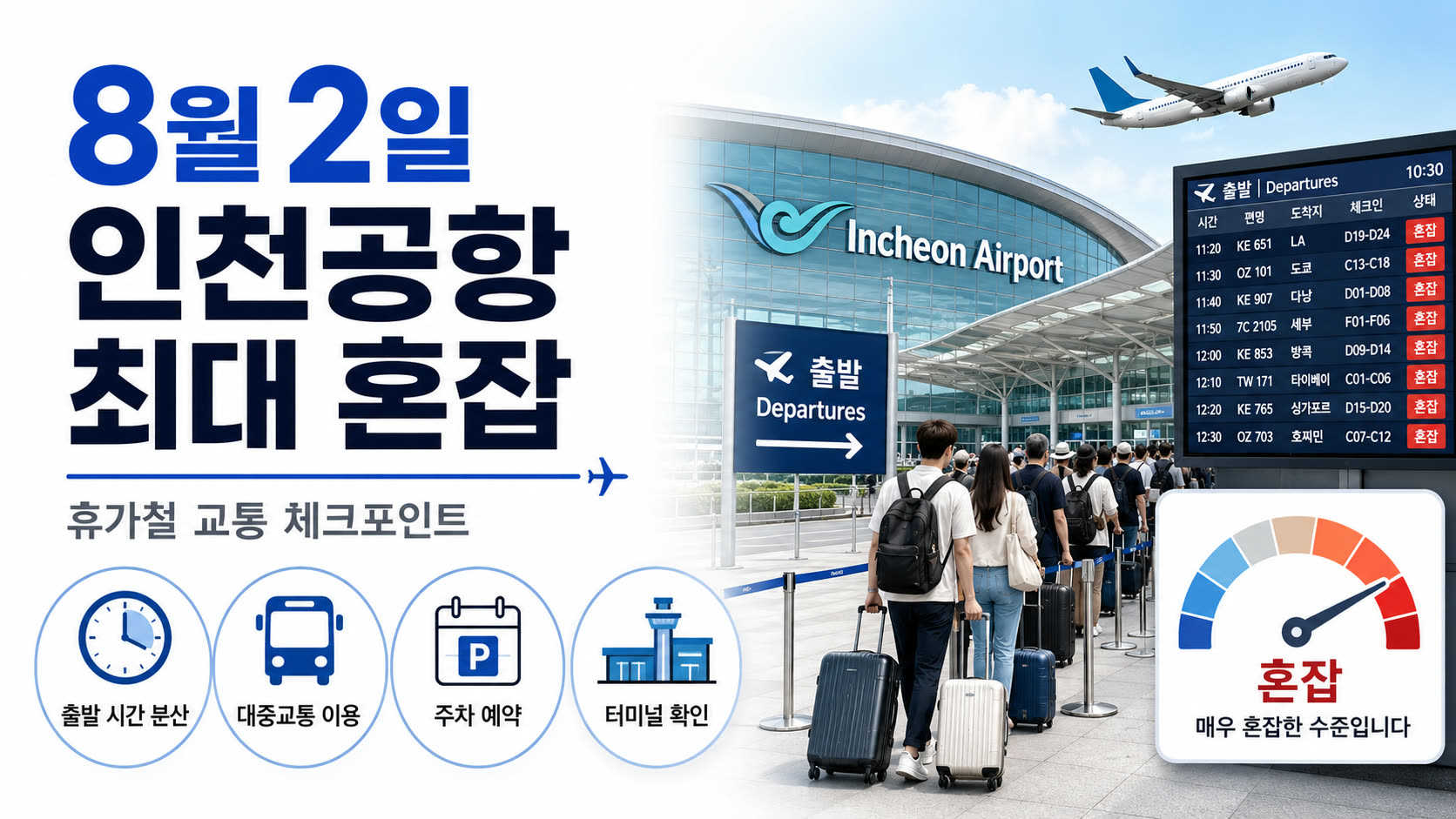
- South Korea's summer holiday transport measures run from July 25 to August 10, 2026.
- The government expects an average of 6.14 million travelers per day during the period.
- Incheon International Airport is expected to be busiest on August 2.
Overview
South Korea is entering one of the busiest points of its summer travel season as the first weekend of August overlaps with holiday trips. The Ministry of Land, Infrastructure and Transport is running special summer transport measures for 17 days, from July 25 to August 10. Based on government transport estimates, the period is expected to see an average of 6.14 million people traveling per day, or about 104.33 million people in total.
Airport congestion is also in focus. Local reports citing airport operators said Incheon International Airport is expected to see its heaviest summer holiday traffic on August 2. During the holiday period, Incheon Airport is expected to handle about 3.77 million international passengers, with daily traffic averaging around 222,000. The August 2 estimate was reported at 234,273 passengers.
Importance
This is a practical travel issue, not just a seasonal headline. Heavy road traffic affects travel time, fuel costs, bus schedules, and rest-stop congestion. For air travelers, a crowded airport can mean longer lines for check-in, baggage drop, security screening, parking, airport buses, and late-night transport.
The timing matters because outbound Korean travelers, inbound foreign visitors, and domestic holiday movement can overlap. Anyone flying on or around August 2 should check the terminal, airline counter, security screening conditions, parking status, and transport options before leaving for the airport.
Check
Drivers should check expressway conditions and alternate routes before leaving. South Korea's summer transport measures include expanded public transport, some road openings, shoulder-lane operations on expressways, and safety management for accident-prone sections. Heat and driver fatigue are also part of the travel risk during peak summer movement.
Air travelers should give themselves more time than usual. On peak days, baggage drop, security screening, airport parking, and immigration can all take longer than expected. Travelers using airports outside Incheon should still check airport-specific notices, because peak dates can differ by airport.
Outcome
The next pressure point is the return flow after the first August weekend. Domestic airports such as Gimpo, Jeju, and Gimhae may see different peak patterns, so travelers should avoid assuming that one airport's congestion forecast applies everywhere.