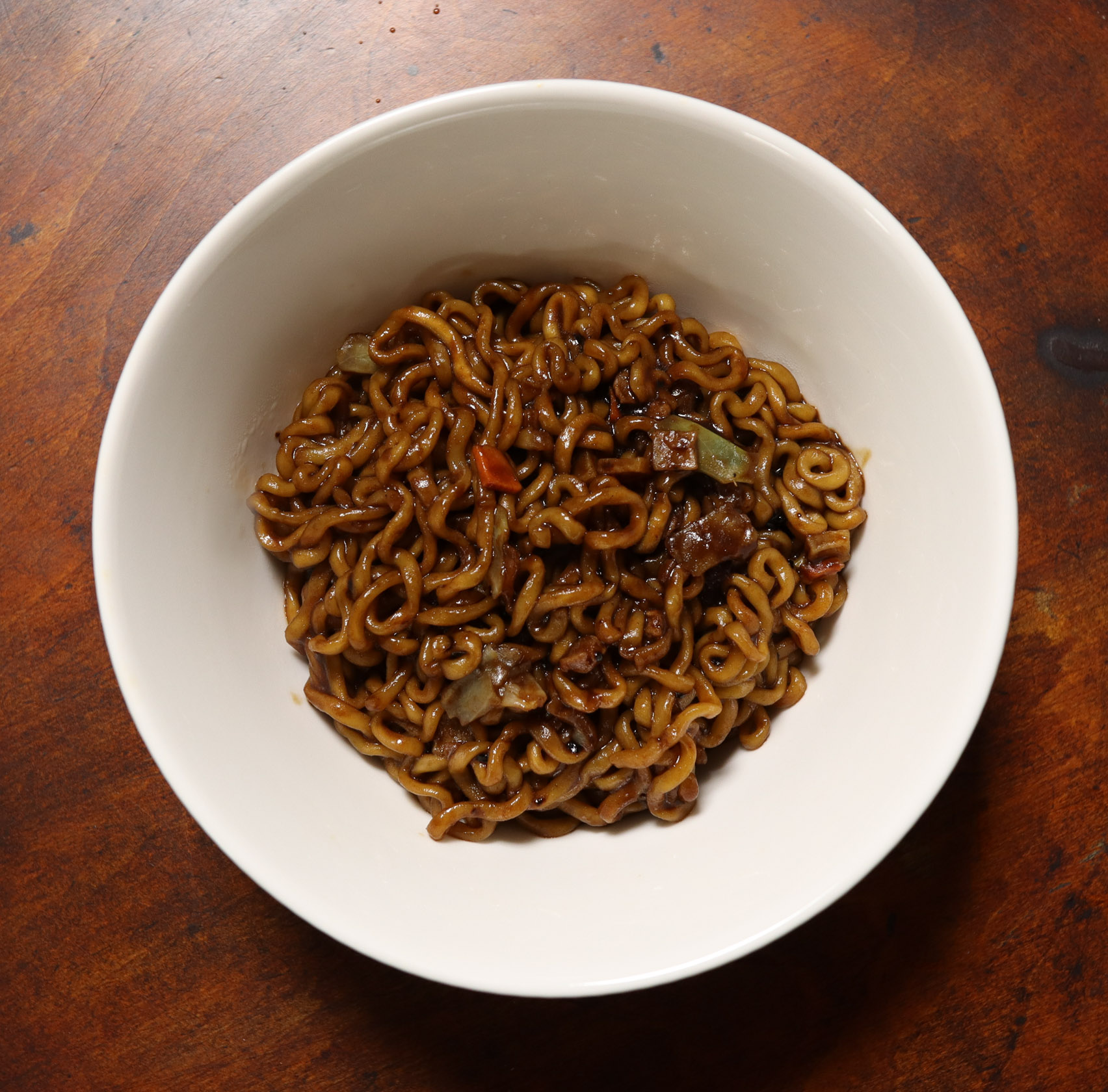
Most Korean instant noodles announce themselves with chili, steam, and a bright red soup. Chapagetti does almost the opposite. There is no broth and very little heat. Its entire personality comes from thick noodles coated in a dark, roasted chajang-style sauce that is savory, gently sweet, and unmistakably earthy.
Nongshim launched Chapagetti in March 1984 with the goal of making the familiar pleasure of jajangmyeon easy to prepare at home. Four decades later, it remains one of the company's defining products. The name joins “chajang” and “spaghetti,” but the eating experience is firmly in the Korean instant-noodle world: springy ramyun noodles, a powdered sauce, dried vegetables, and a small packet of seasoned oil.
This is also a more divisive noodle than its classic status suggests. Across published reviews and customer discussions, the noodle texture is praised far more consistently than the sauce. Fans call the flavor nutty, comforting, and gently sweet; critics describe it as muted, bitter, or slightly burnt. Both reactions make sense, because Chapagetti is deliberately mild and roasted rather than spicy or aggressively salty.
What Comes in the Pack
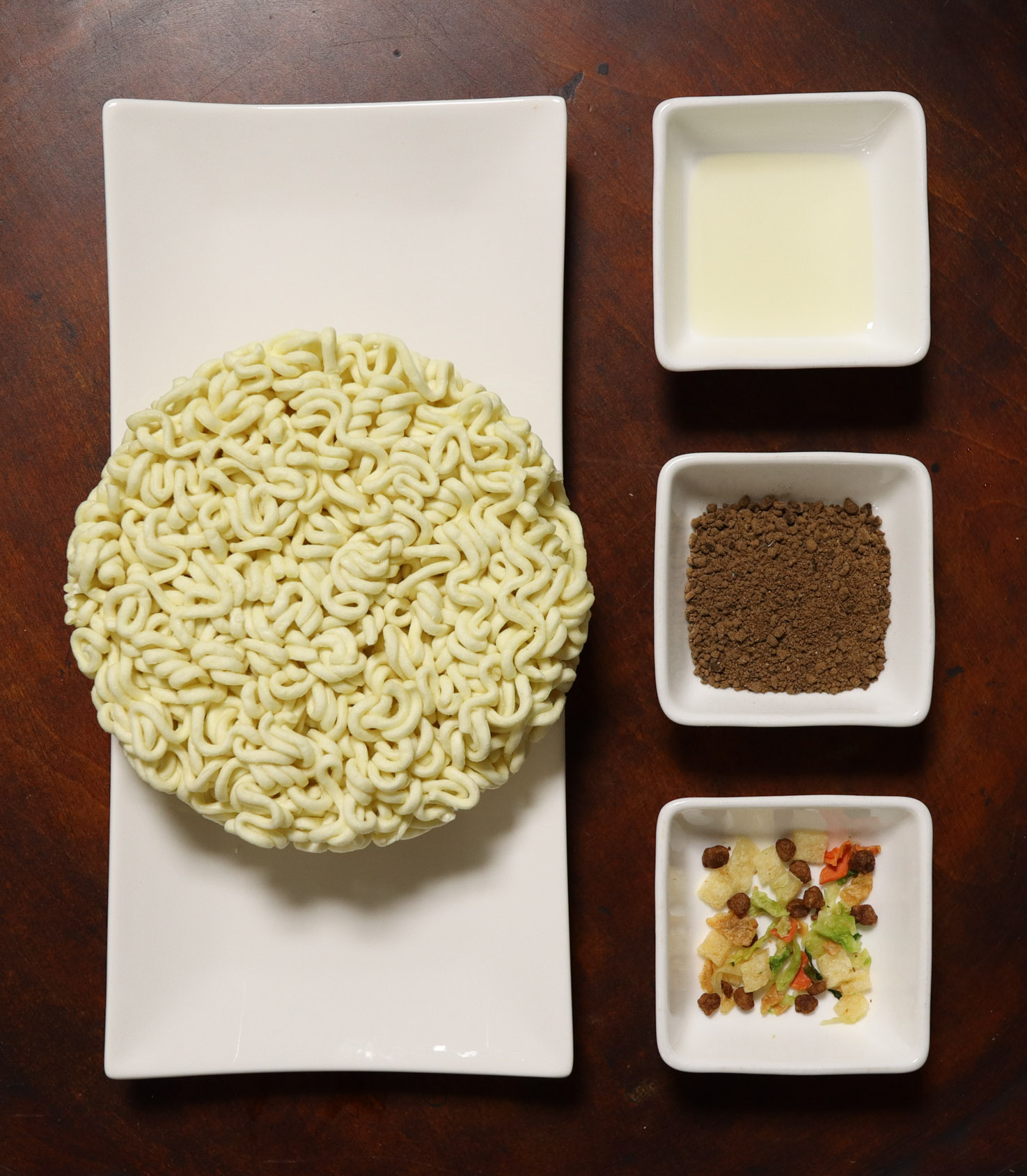
The Korean retail pack commonly sold on Coupang is 140g, including the noodle block and seasonings. Export versions can differ: Nongshim USA lists its bag at 127g, so nutrition numbers and ingredient details should always be checked against the exact package in hand.
Inside, the thick noodle block is accompanied by dried vegetables, powdered sauce, and seasoned vegetable oil. Nongshim's current U.S. ingredient list includes soybean paste, onion, carrot, fried potato, garlic, and sesame oil among the components. It also declares wheat, soy, shrimp, and sesame as allergens.
Taste and Texture
The noodles are the easy win. They are thicker than many standard instant ramyun noodles and retain a satisfying chew when cooked carefully. Because there is no soup to hide in, that springy texture carries the whole bowl. Let them cook too long, however, and the sauce can turn pasty while the noodles lose their bounce.
The sauce begins with a roasted, almost smoky aroma. Its flavor sits somewhere between savory soybean depth, gentle sweetness, onion, and toasted oil. It is mild rather than spicy. Anyone arriving directly from Shin Ramyun or Buldak may initially read that restraint as blandness; anyone who enjoys the softer, earthier profile of jajangmyeon is more likely to find it comforting.
It is important not to promise restaurant jajangmyeon in a five-minute packet. A restaurant sauce is wetter, heavier, and packed with freshly cooked onion and pork or seafood. Chapagetti is drier and more concentrated, with a distinctive roasted-instant flavor of its own. It works best when treated as its own product rather than a perfect miniature of the original dish.
Flavor breakdown:
- Aroma: Roasted chajang seasoning, onion, and toasted oil.
- First bite: Mild sweetness followed by a savory, earthy center.
- Texture: Thick, springy noodles with small pieces of vegetables and potato.
- Heat: Very mild; this is not designed as a spicy noodle.
- Finish: Toasty and slightly bitter, which some people love and others find too subdued.
The Preparation Detail That Matters
Chapagetti is a drained noodle, not a soup. Follow the water quantity and cooking time printed on the regional package, then drain while keeping a small amount of starchy cooking water. Mix in the powder and finishing oil while the noodles are still hot. Too much water makes the sauce weak; too little can leave dry clumps of seasoning. The ideal result is glossy enough to coat every strand without pooling at the bottom.
A fried egg, sliced cucumber, scallions, or a spoonful of kimchi can brighten the bowl without burying it. Chili oil is useful for people who want more heat. The most famous upgrade is Chapaguri: Nongshim's official recipe combines one bag each of Chapagetti and Neoguri, using the full Chapagetti seasoning and part of the spicy Neoguri soup base. The result adds seafood depth and heat to Chapagetti's mild roasted sauce.

Nutrition and Allergens
For the current 127g U.S. bag, Nongshim lists 570 calories, 21g of fat, 86g of carbohydrate, 10g of protein, and 1,100mg of sodium. That sodium figure is 48% of the U.S. Daily Value. The Korean 140g product sold through Coupang is a different size, so these numbers should not be transferred to it without checking its label.
The U.S. version contains wheat, soy, shrimp, and sesame, and is made in a facility that also processes several other common allergens. Formulas can change by market and over time; the physical package remains the final authority.
Final Verdict
Chapagetti deserves its classic status, but not because it is universally lovable. Its thick, chewy noodles are excellent, while the mild roasted sauce is deliberately less punchy than many modern instant noodles. That contrast is exactly why it inspires both fierce nostalgia and puzzled first reactions.
Choose it if you want a non-spicy, brothless noodle with an earthy, savory-sweet profile and plenty of room for toppings. Skip it if you expect the rich wet sauce of restaurant jajangmyeon or the immediate chili hit of Buldak. For first-timers, the safest approach is to prepare it carefully, keep the sauce glossy, and judge Chapagetti on its own terms.
Who is it for? Fans of chewy noodles, mild savory flavors, and Korean comfort-food classics. Spice seekers may prefer it as Chapaguri or with chili oil.
Where to buy: Korean supermarkets, Asian grocery stores, major online retailers, and Coupang in Korea. The commonly listed Korean multipack contains five 140g bags; availability and pricing change frequently.